Every author knows the failure mode, because nearly every author has lived it: the draft is done, so you open chapter one and start making the sentences better. Three weeks later you have a gorgeous first act, a growing suspicion about the middle, and no idea that the real problem is a subplot that needs to die, taking forty of your polished pages with it.
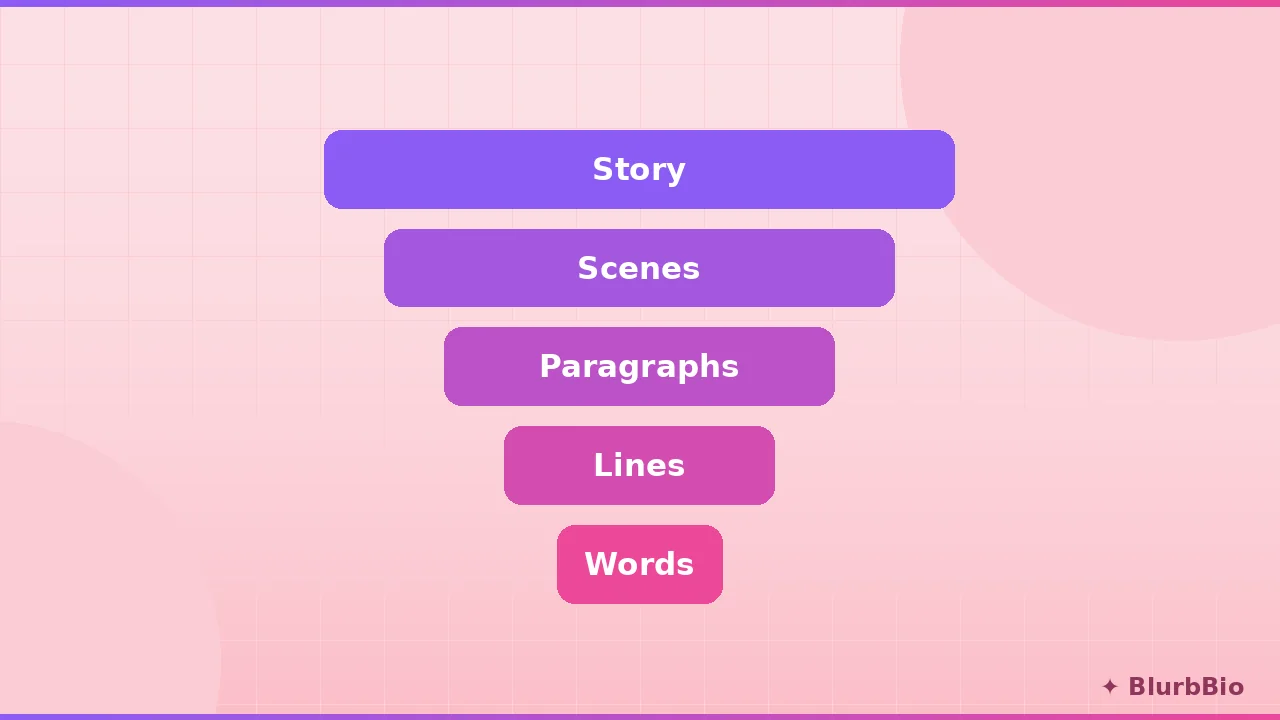
Self-editing does not fail from lack of effort. It fails from wrong order. The professional sequence runs top-down, story before scenes, scenes before sentences, because every level of editing can invalidate the levels below it. Here is the five-pass system in full, including what each pass ignores, which matters as much as what it fixes.
Before pass one: the cooling period
Put the draft away for two to six weeks. This is not ritual; it is the mechanism that makes the structural pass possible. Fresh from drafting, you read your intentions. After distance, you read the page. Every later pass depends on that difference. Use the gap for anything except the draft.
Pass 1: Structure, read fast, fix big
Read the entire manuscript in as few sittings as possible, taking notes and changing nothing. You are answering perhaps eight questions: Does the protagonist want something concrete, and does that want drive the plot? Do the act turns arrive before the momentum dies? Does every subplot pay off or get deliberately closed? Does each major event cause the next, or do things merely happen in sequence? Does the climax resolve the question the opening posed? Is anything essential missing, and is anything present inessential?
Then make only structural changes: cut, move, merge, and add scenes at the outline level. Kill the subplot. Move the reveal. This pass hurts the most and saves the most, because a developmental editor charges four figures largely to tell you what an honest version of this read would have told you. Our developmental editing guide breaks down what those editors fix; the overlap with this pass is not a coincidence.
Pass 2: Scenes, every one earns its place
Now judge each scene individually against three questions. What changes in this scene, in the plot, in a relationship, or in what the reader knows? Whose scene is it, and is that the right point of view for what changes? Where does it start and end, and could it start later and end earlier?
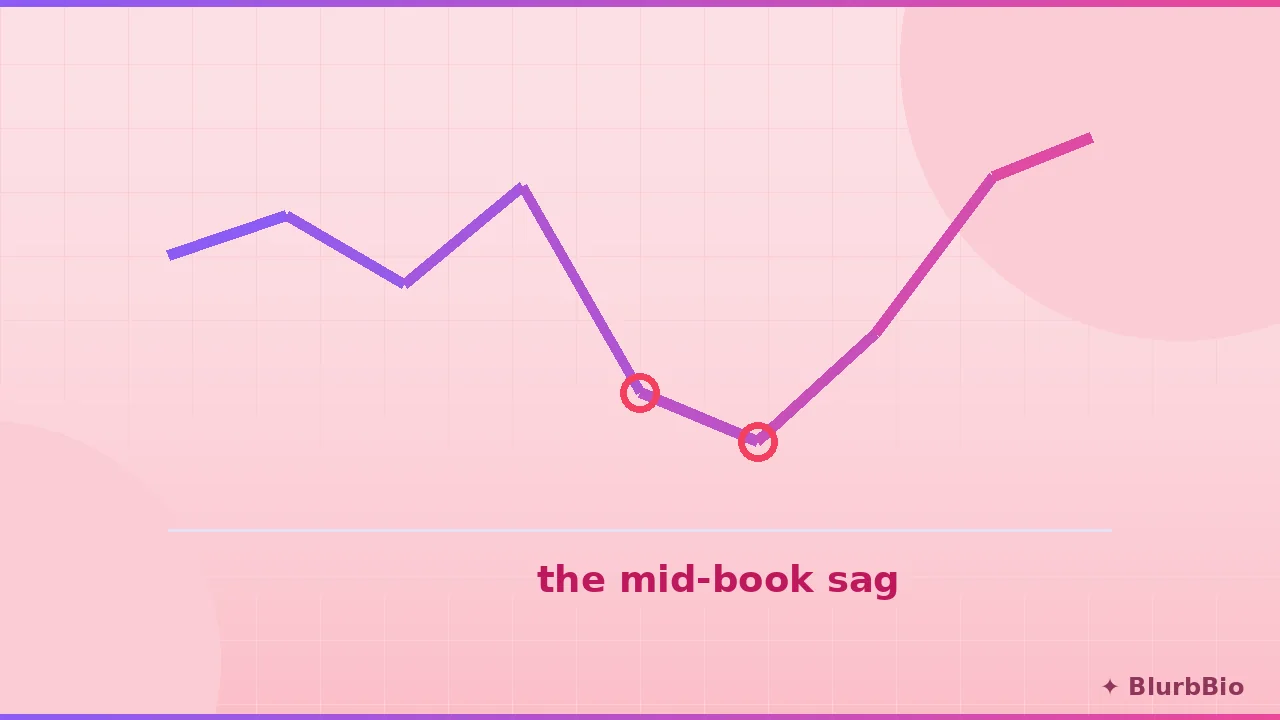
A scene where nothing changes is a candidate for cutting no matter how well written, and this is where the top-down rule pays: because you have not polished these pages yet, cutting them costs a wince instead of a mourning period. Watch specifically for scenes doing jobs already done, the second scene establishing the same fear, the third argument making the same point, since duplicated function is the most common source of the saggy middle.
Pass 3: Continuity, audit the facts
With the story and scenes stable, audit what the manuscript commits to against what it delivers: character knowledge against when they learned it, timeline arithmetic, physical descriptions, object custody, travel times, world rules against their exceptions. Structural editing creates continuity errors, moved scenes carry their old assumptions with them, which is exactly why this pass comes after pass one and not before.
Do it systematically rather than by feel: a story bible plus a scene-by-scene check beats rereading and hoping, and the seven error categories in our plot holes guide make a workable checklist. This pass is also the most automatable of the five, since cross-referencing every chapter against established canon is mechanical work that software performs without fatigue. We run this pass daily on our own test manuscripts while building BlurbBio; here is what the output of an automated passes-one-through-three sweep actually looks like on a 69,800-word, 50-chapter novel:
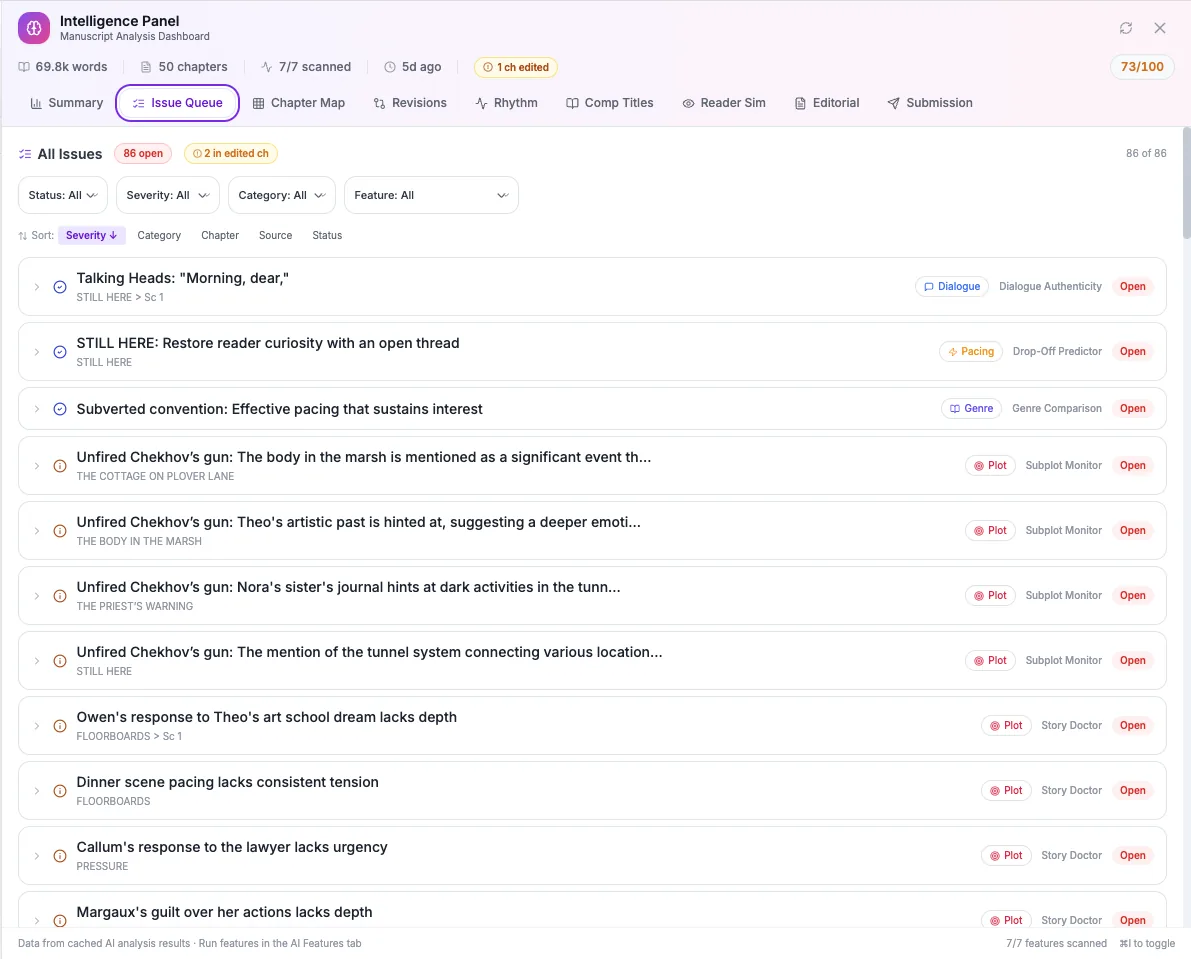
86 findings from five analysis features, each tied to the chapter and scene it lives in: structural issues, purposeless scenes, dialogue problems, and continuity breaks, sorted by severity.
Pass 4: Prose, now the sentences
Only now, with every surviving scene certain to survive, does line work stop being a gamble. Hunt the usual suspects: filter words (saw, felt, heard, noticed), over-telling where the scene already shows, echoes and pet words, dialogue tags doing adverb work, paragraph rhythm that never varies. Read dialogue aloud; ears catch what eyes forgive. Our show, don't tell guide covers the largest single category of prose-level fixes.
Work chapter by chapter, and resist reopening structural questions; if pass four keeps surfacing scene doubts, passes one and two were rushed, and the cheap fix is returning to them now rather than after the polish.
Pass 5: Proofread, correctness only
The final pass fixes errors and changes nothing else: typos, punctuation, formatting, the spelling consistency of invented words. Change the reading conditions to make familiar text look new, different font, different device, or read aloud. Grammar tools earn their keep here, at the end, where their sentence-level focus finally matches the job. Then stop. There is always another pass available, and diminishing returns arrive faster than most authors admit; when a full pass produces only trivial changes, the manuscript is telling you it is done.
What self-editing buys you
A typical developmental edit for a novel runs well into four figures at standard editorial rates, and much of what it finds, structural sag, purposeless scenes, continuity breaks, is exactly what passes one through three catch. The five-pass system does not make professional editing worthless; it makes it efficient, turning the expensive letter that says "your middle collapses" into a cheaper one that argues with your choices instead of your competence. Whether the passes are run by hand, with the analysis tooling that automates the first three, or ahead of a professional edit, the order is the system. Story, scenes, facts, sentences, errors. Never earlier, never backwards.
See also: What Is Developmental Editing? · The 7 Types of Plot Holes · Show, Don't Tell Writing Guide · How to Write a Novel: The Complete Guide