A plot hole is a specific kind of failure: a point in your story where something happens that your story has already made logically impossible. Not implausible, impossible. The constraint isn't "this couldn't happen in the real world." The constraint is "this couldn't happen given what your story established three chapters ago."
That distinction matters because readers grant fiction enormous latitude. They'll accept dragons, time travel, and societies with no plausible economic basis. What they won't forgive is a story that violates its own rules, because the moment that happens, every future event in the narrative becomes suspect. The contract between author and reader depends on internal consistency. Break it once and readers spend the rest of the book looking for the next break.
A 2022 Alliance of Independent Authors survey found that 34% of craft-specific one-star reviews cited plot holes or logical inconsistencies as the primary complaint. A separate BookBub analysis of reader review language found that words like "inconsistent," "didn't make sense," and "couldn't happen" were among the strongest predictors of low ratings. Readers don't always articulate the problem precisely, but they feel it, and they tell others.
Why Plot Holes Are Harder to Catch Than You Think
The reason plot holes survive revision is spatial distance. A rule you established in chapter 4 and violated in chapter 31 spans 27 chapters and potentially weeks of writing time. During a linear read-through, chapter 4 is a distant memory by the time you reach chapter 31. Even experienced authors with strong memory struggle to hold 100,000 words of established fact in working memory while simultaneously evaluating new content.
Plot holes rarely appear where you think they are. The failure usually isn't in the climax, it's in the setup you wrote 200 pages earlier that can no longer support what you decided to do later. You made a decision in chapter 4 without knowing what chapter 31 would require. Chapter 31 made a decision without checking what chapter 4 had established. Neither decision was wrong in isolation. Together they create an impossibility.
The 7 Types
Type 1: Capability Holes
A character does something they've been established as unable to do, or is unable to do something they've been established as capable of.
Example pattern: A character is established in chapter 2 as not knowing how to swim. In chapter 24, they escape by swimming across a river, a detail the plot required without checking what chapter 2 had established.
Why it's common: Capability constraints are established during character introduction and forgotten as the plot demands flexibility. The constraint feels like texture in chapter 2. By chapter 24 it's invisible.
The fix: Your story bible's Characters section should include capability inventories, not just skills a character has but established limitations. Treat limitations as canon with the same rigor as skills.
Type 2: Geography and Travel Holes
Distances, travel times, and spatial relationships are inconsistent within the story's world.
Example pattern: The journey from City A to City B took three days in chapter 6. In chapter 19, a character makes the same journey in half a day, because the plot needed them to arrive quickly.
Why it's common: Authors track narrative time (how many scenes, how much tension) more naturally than literal time. The scene feels like a day's journey. Whether it should be a day's journey given established distances is a separate calculation that intuition doesn't make.
The fix: Your story bible's Locations section should record travel times between every location pair your characters navigate. Check this before writing any scene involving significant travel.
Type 3: Knowledge Holes
A character knows something they have no established way of knowing.
Example pattern: A character reveals information they could only possess if they were present at a secret meeting. They weren't. No one told them. No plausible inference path exists within the story's established facts.
Why it's common: Authors know things their characters don't. Information flows freely in the author's mind while being carefully gated in the story world. The author writes a scene from Character A's perspective and forgets that the character's knowledge is bounded by what the story has given them.
The fix: Before writing any scene where a character acts on information, trace the information chain: where did they learn this? When? Who else knows? If you can't trace the chain, the character doesn't legitimately have the knowledge. Either establish a source or find a different mechanism for the scene.
Type 4: Motive Holes
A character acts against their established motivation without the story providing an explanation for the shift.
Example pattern: A villain with an established ideology, revenge against a specific institution, suddenly acts to preserve that institution because the plot required an alliance. The behavior is inconsistent with the established motivation and the story provides no bridge.
Why it's common: Plot requirements and character consistency pull in opposite directions. The plot needs Character X to do Y. Character X would not do Y given what the story established about them. The author makes X do Y anyway, trusting that the narrative momentum will carry readers past the inconsistency.
The fix: Motive holes often require more than a scene-level fix, they require either establishing earlier groundwork that makes the shift plausible (a relationship that changes the character's calculus) or accepting that the plot needs a different mechanism. The character's established motivation is a constraint. Treat it as one.
Type 5: Timeline Holes
Events occur in impossible or contradictory sequences.
Example pattern: Character A is established to have died in a battle that occurred during winter. In a later chapter, a timeline reference establishes that the battle actually occurred during harvest season, information the author introduced to serve a different purpose, without checking whether it contradicted the established timeline.
Why it's common: Timelines are among the most complex elements to track in long fiction. Authors who don't maintain explicit chronological records accumulate small temporal inconsistencies that compound into structural contradictions.
The fix: A sortable timeline document, even a simple spreadsheet with event, chapter, and estimated date, makes timeline holes visible before they're locked into later chapters. Every event that touches established timing needs to be checked against the timeline document before it's written.
Type 6: Object and Resource Holes
A named item appears, disappears, changes, or multiplies without narrative explanation.
Example pattern: A character is established as having exhausted their ammunition at the end of chapter 15. In chapter 17, they are firing their weapon without the story establishing where the new ammunition came from.
Why it's common: Resource tracking requires the author to maintain an ongoing inventory of what characters possess, not just what they've acquired but what they've used or lost. Intuitive writing doesn't maintain this inventory automatically.
The fix: For any object that the plot actively depends on, weapons, money, specific documents, magical items, maintain an explicit current-possession note in your story bible that you update each time ownership or availability changes.
Type 7: Consequence Holes
An action that should produce significant consequences within the story's world produces none.
Example pattern: A character publicly accuses a powerful figure of corruption in front of witnesses. The story establishes that such accusations are punished severely. No punishment follows. The story moves on as if the accusation hadn't happened.
Why it's common: Authors track outcomes they need for the plot and inadvertently filter out consequences that the world's logic demands but that the plot doesn't use. The consequence isn't forgotten because the author forgot, it's filtered out because the author is focused on the next plot beat.
The fix: Consequence holes are the hardest type to catch through standard revision because they are absences rather than contradictions. The audit method works better: for every significant action a character takes, the canon inventory should ask "what should follow from this?" If the story doesn't address it, the question becomes whether the omission is a deliberate narrative choice or an oversight.
The Three-Step Audit
A single read-through finds plot holes the author isn't already blind to, which, in a manuscript you've written, isn't many. The audit method finds them systematically.
Step 1, Build the canon inventory. Create a two-column document. Left column: every rule, constraint, character capability, established fact, travel time, and logical commitment in your manuscript. Right column: every scene that depends on or touches each left-column item. Work chapter by chapter, not by reading feel.
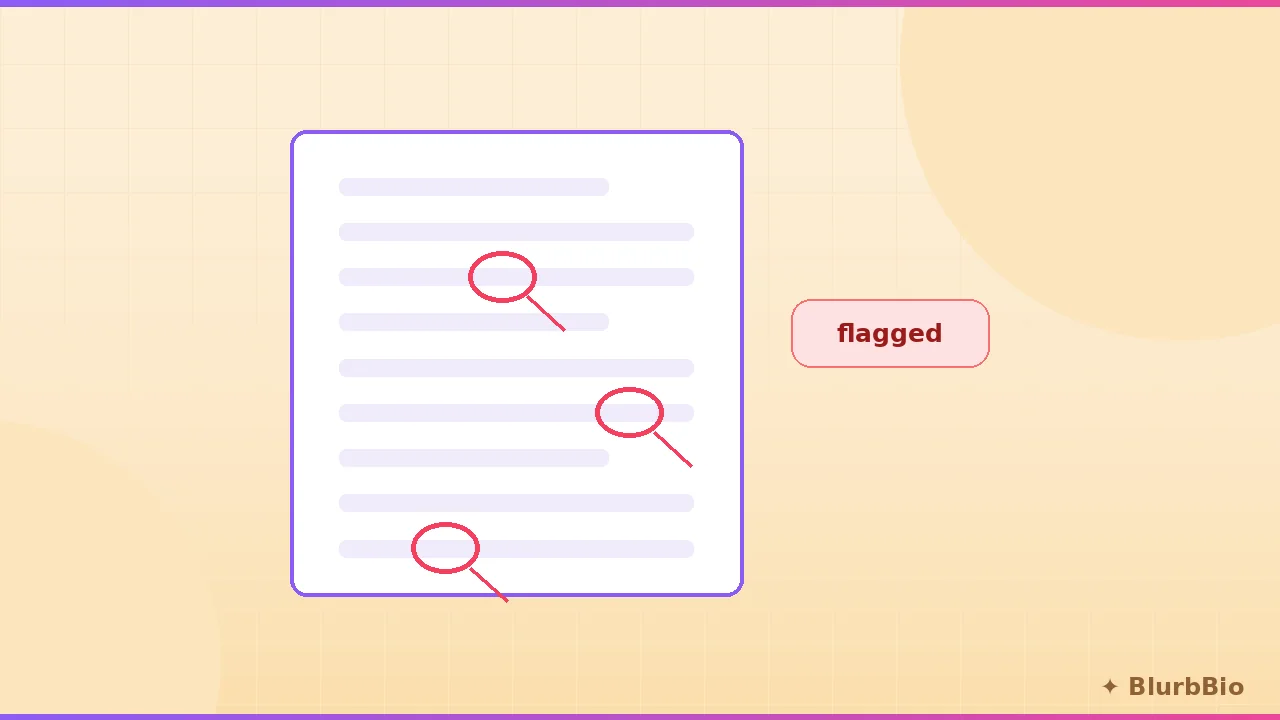
Step 2, Flag without fixing. For each right-column scene, evaluate whether the event can logically occur given the left-column constraint. If it can't, flag it. Do not attempt to explain or rationalize, if the logic doesn't hold on its face, it's a candidate. Critically: collect all candidates before editing a single word. Editing during the audit contaminates it, because you start unconsciously accepting explanations for things that don't have them.
Step 3, Binary resolution. For each flagged candidate: rewrite the scene to comply with the established rule, or rewrite the rule and then audit every other scene that relied on it. Never leave both the inconsistent scene and the contradicting rule in place. If you change a rule, return to the left column and work through all right-column scenes that referenced it.
The Prevention Advantage
The audit catches holes that already exist. Prevention keeps them from forming.
The most effective prevention is a story bible updated after every writing session, specifically the Canon Facts and Locations sections, where the constraints that generate plot holes live. The rule you log in chapter 4 stays visible in chapter 31. The constraint you established in your characters section is there to check when the plot needs them to do something new.
Authors who build their story bible retroactively during revision face an additional challenge: their memory of what they intended is contaminated by what they actually wrote. Writing the canon entry at the moment of establishment, before intention and execution blur, produces a more reliable record.
BlurbBio's conflict detection engine cross-references every new chapter against your established canon, flagging contradictions before they become published plot holes. When your manuscript says something that contradicts what it said thirty chapters ago, you find out immediately, not in revision.
See also: How to Build a Story Bible · Character Voice Fingerprinting: Make Every Character Sound Unmistakably Themselves · How to Write a Novel: The Complete Guide