Every indie author hits this fork, usually about a week before launch, and the internet's answer is a food fight: KU authors citing page-read royalties that dwarf their sales income, wide authors citing the account-termination horror stories and the readers on Kobo and in libraries that exclusivity forfeits forever. Both sides are describing real outcomes. They are just describing different genres, different catalogs, and different risk tolerances.
So this guide will not hand you a winner. It will hand you the actual mechanics, what changed in 2026, and a framework for making the call with your own numbers.
How each model pays
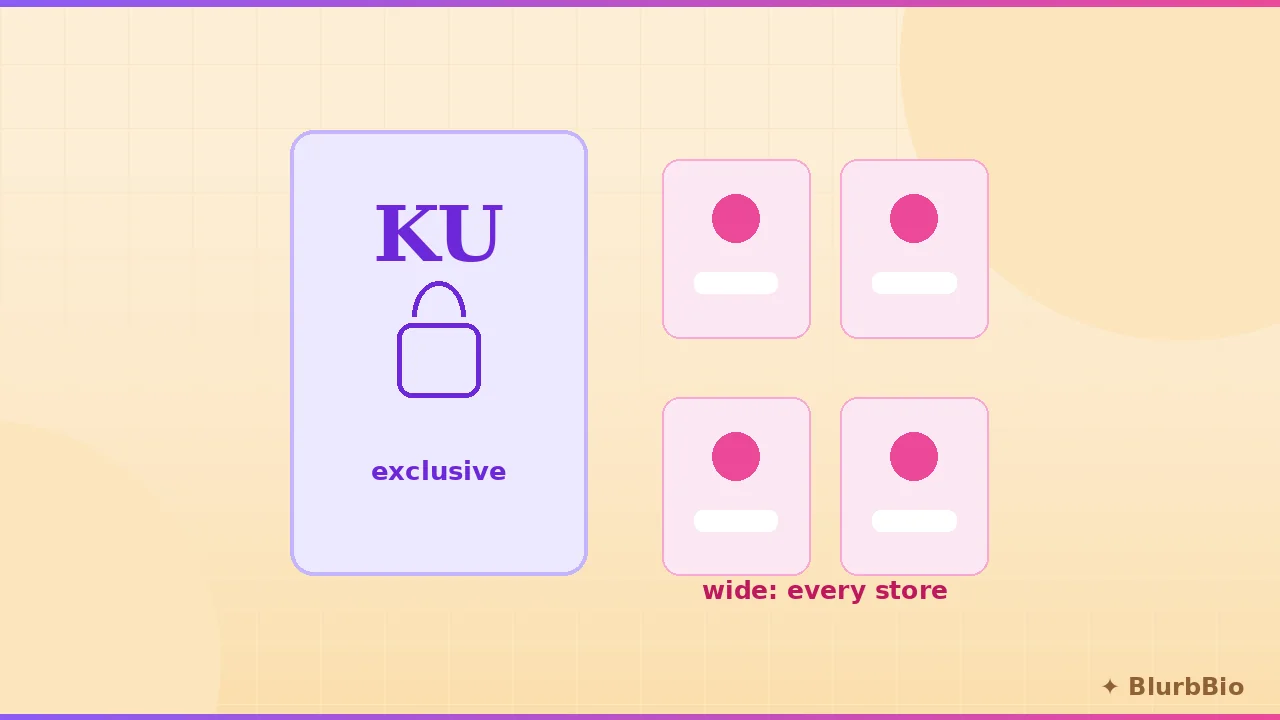
KDP Select is a 90-day, auto-renewing exclusivity agreement on your ebook: while enrolled, it can be sold nowhere else, not your own site, not for free to your newsletter. In exchange, the book earns from Kindle Unlimited: subscribers read for free, and you are paid per page read from a shared monthly fund divided across every enrolled title's pages, at a fluctuating rate that has historically hovered in the rough neighborhood of four tenths of a cent per page. A completed 300-page novel pays on the order of a mid-priced ebook royalty; a devoured ten-book series pays like ten of them. Select also unlocks Countdown Deals and free promotion days, and, less officially, KU borrows feed the same sales-rank machinery that drives Amazon visibility, which is why launches in Select tend to climb ranks faster.
Wide means presence everywhere: Apple Books, Kobo, Barnes and Noble, Google Play, direct sales from your own store, and the library channels (OverDrive/Libby, Hoopla) that exclusivity locks you out of, reached either directly per-platform or through an aggregator like Draft2Digital or PublishDrive for a cut. Revenue per reader is straight royalties; there is no pool. What wide buys is diversification and compounding: platforms like Kobo and Apple actively merchandise indie titles, libraries build long-tail readership, and no single company's policy change can zero your income overnight.
The models reward different reader behaviors. KU pays for immersion, binge-reading volume inside one ecosystem. Wide pays for presence, being purchasable wherever a given reader already shops.
What 2026 changed
Three shifts have moved the trade-offs since the classic advice was written.
The pool is under pressure. Amazon's 2026 enforcement push against undisclosed AI-generated content, identity verification, automated detection, tightened upload limits, exists because the flood is real, and every low-quality enrollment that captures any page reads dilutes the shared fund all Select authors are paid from. The fund grows, but so does the divisor. Legitimate KU authors increasingly describe the program as strong but noisier, with visibility harder to buy than it was.
Compliance risk concentrated. Exclusivity always carried platform risk; a stricter enforcement regime raises the stakes of having one account, at one retailer, as your entire income, including for authors caught in false-positive sweeps. Amazon's own AI disclosure regime (which our KDP AI disclosure guide covers in detail) is straightforward to comply with; the structural lesson of 2026 is that policy weather at a single company is now a line item in the exclusivity price.
Wide got wider. The direct-sales wave, authors selling ebooks, signed editions, and bundles from their own storefronts, has matured from experiment to standard practice among established indies, and new retail and library channels keep arriving through the aggregators. None of this is available to an exclusive ebook, and all of it compounds: a mailing list buying direct is the one sales channel no algorithm can take away.
The genre map
The single strongest predictor of the right answer is genre, because genre determines reader behavior.
| Profile | Favors | Why |
|---|---|---|
| Romance, romantasy, LitRPG, urban fantasy, serial thrillers | KU first | Binge readers, high read-through, series velocity, KU's native audience |
| Literary, book club fiction, standalone-heavy catalogs | Wide | Buy-and-keep readers, library demand, less binge behavior |
| Nonfiction with evergreen search demand | Wide | Library and international channels, direct sales to niche audiences |
| Children's and illustrated | Wide | Print-led, library-led, low KU page counts |
| New author, first book, binge genre | KU launch | Rank velocity and zero-cost trial for unknown names |
| Established list, direct-sales ambitions | Wide or hybrid | Compounding owned channels outgrow pool payouts |
Hybrid strategies that actually work
The debate is framed as binary; practice is not. Three patterns dominate among working authors:
Launch exclusive, go wide later. Enroll a new series in Select for one or two 90-day terms to harvest launch velocity and page reads, then exit and distribute wide once the Amazon-native audience is captured. The cost is the awkward transition and re-launching on every other store from zero rank.
Split the catalog by series. Binge-paced series live in KU; standalone or slower work goes wide. The one hard rule: never split a single series across models, because sending KU readers to book three they cannot borrow burns exactly the readers the series earned.
Wide plus direct as the spine. Everything wide, with your own storefront and mailing list as the primary funnel, treating every retailer including Amazon as one channel among several. Slowest to build, most durable once built, and the model the 2026 sovereignty conversation keeps pointing toward.
Run the math on your own book before believing anyone's ideology, including this guide's. Estimate: (your ebook royalty per sale on each wide store × realistic monthly sales there) versus (pages in your book × completion rate × borrows × the current per-page rate). Most authors have never actually computed both sides for their title, and the answer frequently surprises in both directions.
The decision framework
Answer five questions honestly. Where do your genre's readers actually read? Search your subgenre's top 100: if it is wall-to-wall KU flags, that is your audience raising its hand. How deep is your catalog? Exclusivity's compounding (borrow-driven rank, series page reads) needs multiple books to compound; so does wide's (store merchandising, list-building), but wide punishes thin catalogs less. What is your read-through? KU pays for pages actually read; a book that loses readers at chapter five earns a fraction of its page count, which makes craft-level retention, pacing, continuity, openings, a direct revenue input in this model. What is your platform risk tolerance? One income source at one company is a real position in 2026, hold it deliberately or not at all. What are you building toward? Fastest income this year points one way; an owned audience over a decade points the other.
There is no permanently correct answer, and the choice is reversible on 90-day boundaries, which makes it cheaper to test than to argue about. Pick the model your evidence supports, commit for a full series cycle, measure, and let your own numbers, not the food fight, decide the next one.
Which side are you on?
Four honest questions. Mostly KU-side answers means exclusivity fits your situation; fewer means wide deserves a hard look.
Whichever side you land on, BlurbBio covers the production path from manuscript to retailer-ready files, including print-ready IngramSpark export.
See also: Amazon KDP AI Disclosure Guide · Book Formatting for Print · How to Write a Book Blurb · How to Keep a Book Series Consistent