Somewhere in every first draft, the question arrives: is this chapter too long? Too short? Do they all need to match? Unlike most craft questions, this one has usable numbers, and more usefully, it has a mechanism, because chapter length is not a formatting preference. It is the throttle. Readers feel chapter length as pace more directly than they feel any sentence-level choice you make, and the genres have each settled on the throttle position their readers expect.
The numbers
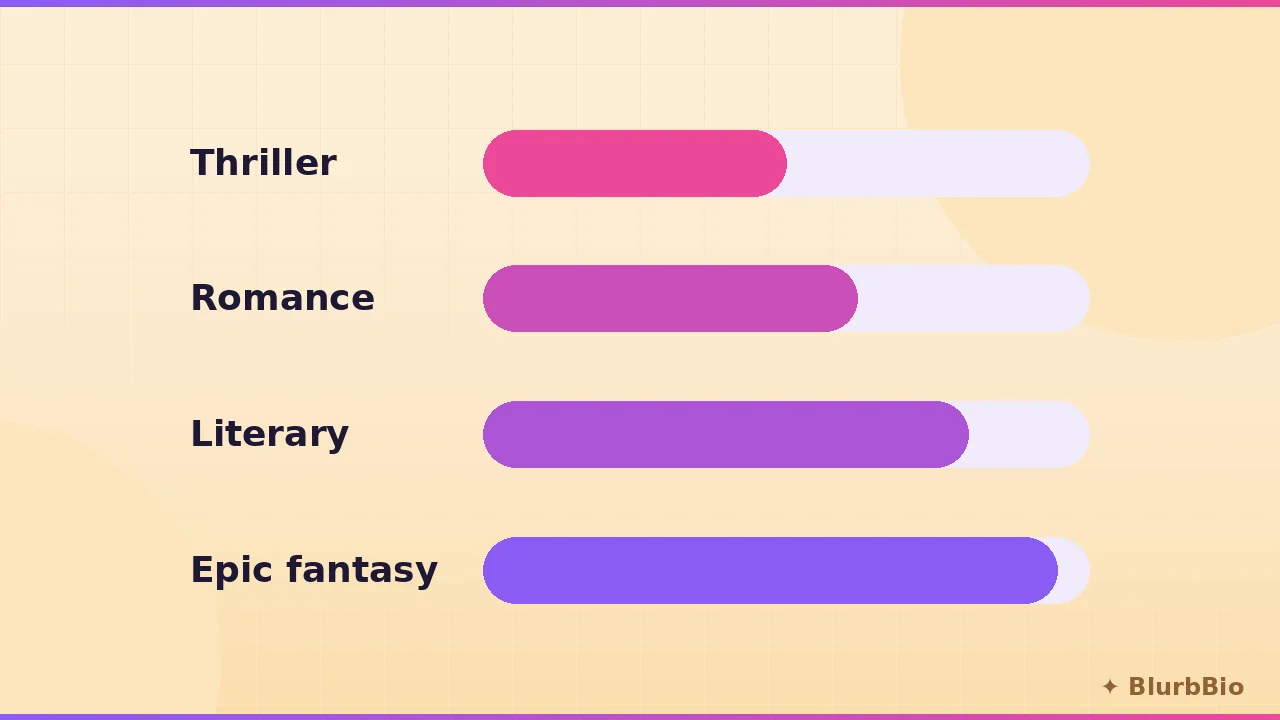
The working range across commercial fiction runs from about 1,500 to 5,000 words per chapter, with the center of gravity near 3,000 to 4,000, which is 10 to 15 printed pages at the standard 250 to 300 words per page. Around that center, the genres spread exactly the way their pacing contracts predict:
| Genre | Typical chapter length | The logic |
|---|---|---|
| Thriller and suspense | 1,500 to 2,500 words | Frequent breaks manufacture momentum |
| Crime and mystery | 2,500 to 4,000 | Procedural beats, one development per chapter |
| Romance | 2,500 to 4,000 | Scene-and-beat rhythm, often POV-alternating |
| Contemporary and women's fiction | 3,000 to 4,500 | The commercial center |
| Literary fiction | Widely variable, 3,000 to 6,000+ | Rhythm serves voice over velocity |
| Fantasy and science fiction | 3,500 to 6,000 | Immersion and worldbuilding need runway |
| Epic fantasy | 4,000 to 7,000+ | Long POV chapters, often labeled |
| Young adult | 2,000 to 4,000 | Velocity expectations skew short |
| Middle grade | 1,000 to 2,500 | Session length of the actual reader |
Treat the table as each genre's default throttle setting, the length at which chapters feel normal to that shelf's readers, and remember it describes averages inside books, not laws for every chapter.
Why length is pace: the exit-ramp mechanism
The mechanism underneath all of this is simple and worth internalizing: a chapter break is the only place a reader can stop without the small guilt of stopping mid-scene. Breaks are the book's exit ramps. Short chapters place exits every few minutes, which sounds like it should make stopping easier, and instead does the opposite: each exit offered and refused ("it's only seven pages") renews the reader's commitment, and an unanswered question placed at the break converts the exit into an entrance to the next chapter. This is the entire engineering behind the one-more-chapter phenomenon, and behind the short-chapter commercial style that dominates thrillers.
Long chapters run the opposite strategy: fewer exits means deeper immersion per sitting, which is why the genres selling immersion, epic fantasy above all, run long. Neither strategy is superior; they are different contracts, and the table above is just each genre's contract written down.
Where to break: instability beats completion
Length decides how often exits appear; the ending decides whether they get taken. The reliable principle: end chapters on instability, not completion. A chapter that closes with the day ending and the character asleep hands the reader a finished unit and permission to leave; a chapter that closes on an arrival, a reversal, a question opened, or a decision made but not yet executed leaves the account open. The old scene wisdom, enter late, leave early, applies double at chapter breaks, because the break is where leaving early gets paid.
Structurally, a chapter needs what a scene needs: something changes between its first page and its last, in the plot, a relationship, or the reader's knowledge. Chapters where nothing changes are the ones readers report as slow regardless of length, which is why the chapter question and the pacing question are the same question wearing different clothes.
Using the numbers in revision
The practical move is an audit, and it takes ten minutes: list your chapters with their word counts and read the list as a shape. Wild unmotivated swings, a 1,800-word chapter beside a 7,200-word one for no rhythmic reason, read as inconsistency; a slow lengthening through the middle is a pacing warning, since the middle is where books sag and where chapters quietly bloat; lengths shortening into the climax is the shape of acceleration and usually a good sign. Then check the shape against your genre's row in the table, because a thriller whose chapters average 5,500 words is making a pacing promise its shelf did not, and readers will report it as slow without ever knowing they were counting.
Three special cases deserve their own numbers. First chapters run shorter than a book's average in most commercial fiction, because the opening's job is velocity and the fastest way to a second chapter is a short first one. Prologues, where they exist at all, stay lean, typically under 2,000 words, since a long prologue delays the actual promise of the book and agents openly count it against you. And epilogues run shortest of all, a scene, not a sequence, because everything after the climax is coasting on borrowed momentum. The other special case is the chapterless or part-based structure some literary novels use: it is a legitimate design, but understand what it spends, since removing chapter breaks removes the exit ramps, and with them the renewal mechanism that commercial pacing relies on.
Chapter length will never rescue a broken story, and the table above is a set of defaults, not commandments; every rule here is broken brilliantly somewhere. But the defaults exist because readers' expectations exist, and the authors who break them best are the ones who knew exactly what setting the throttle was on before they moved it.
See also: How Many Words Is a Novel? · How to Fix Pacing in Your Novel · How to Self-Edit Your Novel · How to Write a Novel: The Complete Guide