Ask published authors what they underestimated as beginners and naming comes up with surprising frequency, because a name is not a label. It is the single word readers will process more often than any other in your book, a compressed signal of era, class, culture, and temperament, and one axle of the pattern-matching system readers use to keep your cast straight. Get it right and nobody notices. Get it wrong and readers confuse two characters for three hundred pages or stumble over an unpronounceable protagonist four hundred times.
Professionals run names through a system. Here it is, as five tests, plus the genre-specific machinery for historical and fantasy casts.
The five tests
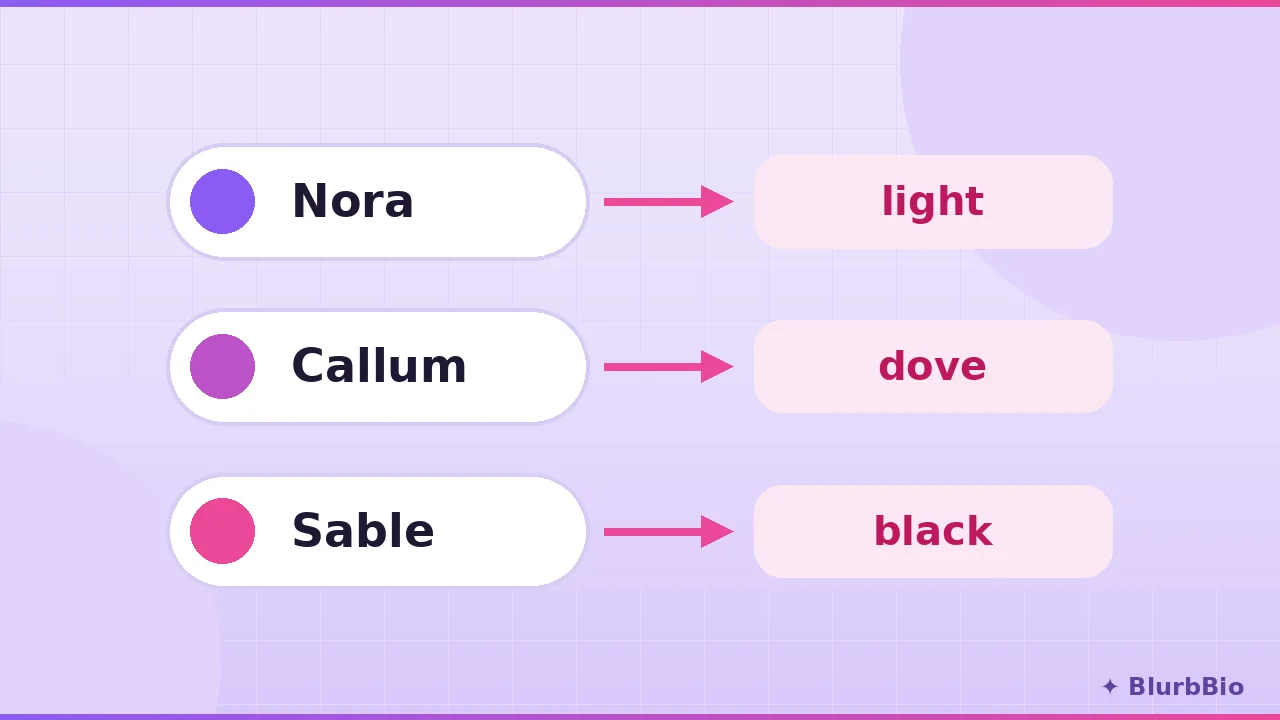
1. Distinctiveness within the cast. Readers identify names by shape: first letter, length, and stress pattern. So the first-letter rule: no two significant characters share an initial. Then the rhythm rule: vary syllable counts and stress among your leads. A cast of Marcus, Martin, and Marissa is unreadable; a cast of Marcus, Theo, and Evangeline never blurs. Minor characters get more latitude, but the smaller their role, the more distinctive their name needs to be to be remembered at all.
2. Pronounceability. Readers subvocalize. A name they cannot resolve into sound becomes a small toll paid on every appearance, and the accumulated cost is real reader fatigue. The test is reading it cold, aloud. If a difficult name is non-negotiable, and sometimes it should be, for cultural authenticity, resolve the pronunciation early through context, another character's usage, or a nickname.
3. Era and culture fit. Covered in depth below, because it is the test with actual reference data behind it.
4. Connotation. Every name arrives pre-loaded: sounds have textures (plosives read hard, liquids read soft), and cultural associations do half the characterization before the character acts. Use the loading deliberately, and beware the accidental kind: the name shared with a current celebrity, the villain name that belongs to someone the reader knows.
5. Cast fit. The final test is the roster read aloud as a list. It should sound like people who plausibly coexist in one world, varied in texture, coherent in register, with nobody colliding. This is the test that catches what the other four individually miss.
Era-accurate naming: use records, not vibes
Historical and contemporary-realist fiction has an unfair advantage most authors ignore: the data exists. The US Social Security Administration publishes actual name frequencies for every birth year since 1880, which converts "what would a 60-year-old in my 2026-set novel be called" from guesswork into lookup: you want the popular names of 1966, not of 2026. For other cultures and deeper history, etymology databases like Behind the Name document first attestations, and census and parish records survive in searchable form for much of Europe.
The trap is not obscurity but anachronism, and it runs both directions. Madison as a girl's name barely exists before the 1980s; a Victorian heroine named Brittany breaks the spell for every reader who half-knows names. Meanwhile Tiffany is authentically medieval and reads as impossible anyway, the famous "Tiffany problem": sometimes accuracy loses to expectation, and expectation wins, because the goal is reader trust, not a footnote.
Fantasy naming: systems, not one-offs
Invented names fail in two familiar ways: the apostrophe-soup name nobody can pronounce, and the incoherent cast where every name sounds like it came from a different randomizer, because it did. The fix for both is the same: name cultures, not characters. Assign each culture in your world a small phonetic identity, two or three sound families, characteristic endings, a syllable tendency, and generate names inside it. Rhaenys, Rhaegar, and Rhaella tell you they are family before the text does; that is a phonetic system working. Keep leads to three syllables or fewer, save the heavy names for places and gods where readers can skim the shape, and let hard-to-say names carry a natural nickname.
One inheritance from the real world worth keeping: naming conventions themselves. Patronymics, place-surnames, order-names taken at initiation, cultures reveal themselves in how they name, not just what the names sound like, and it is free worldbuilding.
The rename, and the drift you don't notice
Names fail in drafts, and renaming is normal, but it has a failure mode of its own: the incomplete rename that leaves a stray old name in chapter 22, and its quieter sibling, spelling drift, where Katherine becomes Kathryn somewhere in month three and both versions survive to the proof. Do renames with case-sensitive find-and-replace plus a manual pass for nicknames and possessives, and log every character's canonical spelling and variants in your story bible, because the variant list, who calls her Kat, who calls her Ashworth, is also a characterization record. This is also a place automation genuinely earns its keep: name-variant and spelling-drift detection is mechanical work that manuscript analysis performs perfectly and human proofreading performs badly, especially at novel length.
Two refinements separate professional naming from competent naming. First, nicknames are characterization at zero cost: who is permitted to shorten a name, and to what, maps the book's intimacy structure. A protagonist who is Katherine to her mother, Kate to colleagues, and Katie to exactly one person has a relationship map encoded in her name before any scene establishes it, and the moment a new character presumes the intimate form uninvited, the reader feels the trespass. Second, surnames carry the freight first names cannot: class, region, occupation history, and immigration story all live in family names, which is why a cast of Ashworths and Pemberton-Hales tells you the setting's social altitude instantly, and why mixing surname registers within one family is a continuity error readers catch. Log both layers, canonical name, every variant, and who uses which, in the character entry, because the variant map is precisely what drifts across a long draft.
Name your cast like it matters, because for the reader, the names are the cast.
See also: How to Write Compelling Characters · Character Voice Fingerprinting · The Story Bible Template · How to Write a Novel: The Complete Guide