In a 2024 Reedsy survey of 2,100 readers, 78% said they had stopped reading a book because they could not connect with the main character. Asked what connection meant, the most common answers were: the character's decisions made no sense, the character felt like a puppet of the plot, or they couldn't understand what the character actually wanted.
None of those complaints are about likeability. The most beloved characters in literary history include a depressive Danish prince, a scheming social climber, a murderous sea captain, and a brilliant but emotionally destructive consultant. Readers connected to all of them not because they approved of their choices but because they understood the internal logic that made those choices feel inevitable.
That internal logic is what this guide builds.
The Wound: Where Every Character Begins
Every compelling character starts with damage.
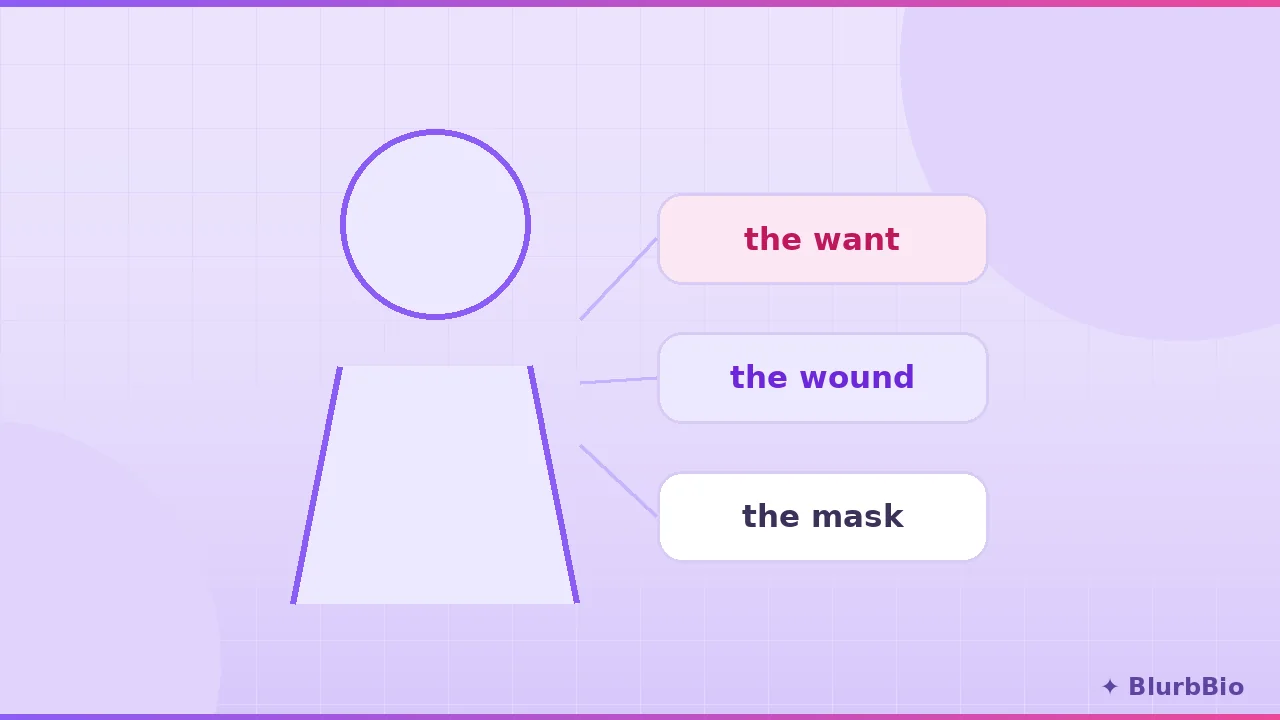
The wound is a formative experience, usually in childhood or adolescence, occasionally early adulthood, that created a distorted understanding of the world, of other people, or of the character themselves. It doesn't have to be dramatic. It has to be specific enough to have genuinely altered how the character sees things, and consequential enough to have produced a misbelief that still governs their behaviour at the start of your story.
What makes a wound useful for fiction:
A wound is useful when it is specific, personal, and generative. Specific: not "a difficult childhood" but a particular incident, relationship, or pattern. Personal: directly connected to what this character values and fears above all else. Generative: it produces a misbelief that logically follows from the experience, so logically that the reader understands how any person might have drawn the same conclusion from the same evidence.
Elizabeth Bennet's wound is growing up in a household where intelligence was not valued by the people with the most power over her life, her mother, the marriage market, the economic system she was born into. Her sharpness developed as both defence and source of self-worth. It produced a misbelief she considers a strength: that she reads people accurately, without prejudice. This is the misbelief Darcy's letter dismantles.
The Misbelief: The Engine of Character Behaviour
The misbelief is the false conclusion the wound produced, what the character believes about themselves or the world that isn't true, but that feels completely and viscerally true to them because it was formed from real experience.
This distinction matters: the misbelief must be internally logical. A character whose wound was public humiliation and whose misbelief is "I am fundamentally unworthy of respect" follows a plausible psychological path from experience to conclusion. A character whose wound was public humiliation and whose misbelief is "all buildings are dangerous" does not. Readers sense the arbitrariness of the second and disengage.
Misbelief vs character flaw:
A character flaw is a trait, arrogance, cowardice, cruelty. A misbelief is the belief that drives the flaw. Arrogance often stems from a misbelief like "I must prove my superiority because otherwise the people who treated me as inferior were right." Understanding the misbelief explains the flaw rather than labelling it, and that understanding produces empathy for a character who might otherwise be simply unlikeable.
The misbelief operates in every significant scene. It's the lens through which the character interprets events. It's the reason they misread situations that readers can see clearly. It's why they make decisions that produce the opposite of what they actually need. In a well-constructed story, the reader is frequently a step ahead of the character, they can see the misbelief operating, which creates dramatic irony and sustained investment.
Want vs Need: The Engine of Plot
The want is the external goal, the specific, achievable objective the character is consciously pursuing. It drives the plot forward. It gives the reader something to track. It should be concrete: get the promotion, find the murderer, win back the person they love, survive the winter.
The need is the internal truth the character requires to genuinely heal, and which the misbelief is actively preventing them from accepting. The need is usually not consciously known to the character. It's what the story is about, underneath the plot.
The tension between want and need generates thematic resonance. When a character achieves the want without addressing the need, the ending feels hollow. When a character achieves the need by sacrificing the want, the ending is bittersweet but true. When they achieve both, the arc is complete.
The Ghost: The Past That Won't Stay Past
The ghost is the specific moment, memory, or relationship from the character's past that they haven't resolved. It is more particular than the wound, it's the clearest, most painful instance of the wound in action.
The ghost resurfaces at the worst narrative moments. In a well-constructed story, the climax is often structured around forcing the character to finally face the ghost rather than evade it. The resolution of the ghost is frequently the resolution of the misbelief.
In literary fiction, the ghost may never be explicitly addressed. It surfaces only in the texture of behaviour, in what the character notices, in the subjects they avoid. The ghost in The Remains of the Day is everything Stevens chose professional duty over. It is never named directly. It is present in every decision he makes and every word he cannot bring himself to say.
In commercial fiction, the ghost is often the reason the protagonist is in this story at all. The detective who cannot stop working missing persons cases because of the sister they could not find. The lawyer who takes the impossible case because of the client they failed to defend years ago. The ghost explains the motivation without requiring exposition.
Antagonists: The Mirror Character
The most resonant antagonists share the protagonist's wound but drew a different conclusion from it.
When protagonist and antagonist share a wound, their conflict becomes a debate about competing conclusions from the same evidence. The story asks: given this damage, what do you become? That question is thematically alive in a way that simple hero-versus-villain conflict is not.
Magneto and Professor X both survived persecution. Charles concludes that coexistence through education is possible. Erik concludes that survival requires power and pre-emptive dominance. Neither position is irrational given the evidence. The debate is genuine. That is why the conflict has resonated across decades of stories in multiple media.
The antagonist's misbelief is often a dark mirror of the protagonist's, a version of the same wound taken further, without the relationships or circumstances that gave the protagonist a chance to question it.
The Only Test That Matters
At every plot turning point, ask: is the protagonist's choice driven by their established psychology, or by the plot's requirement for them to be somewhere?
If the answer is "plot requirement," the architecture hasn't been built firmly enough. Readers leave books when protagonists stop making decisions and become vehicles for events that happen to them.
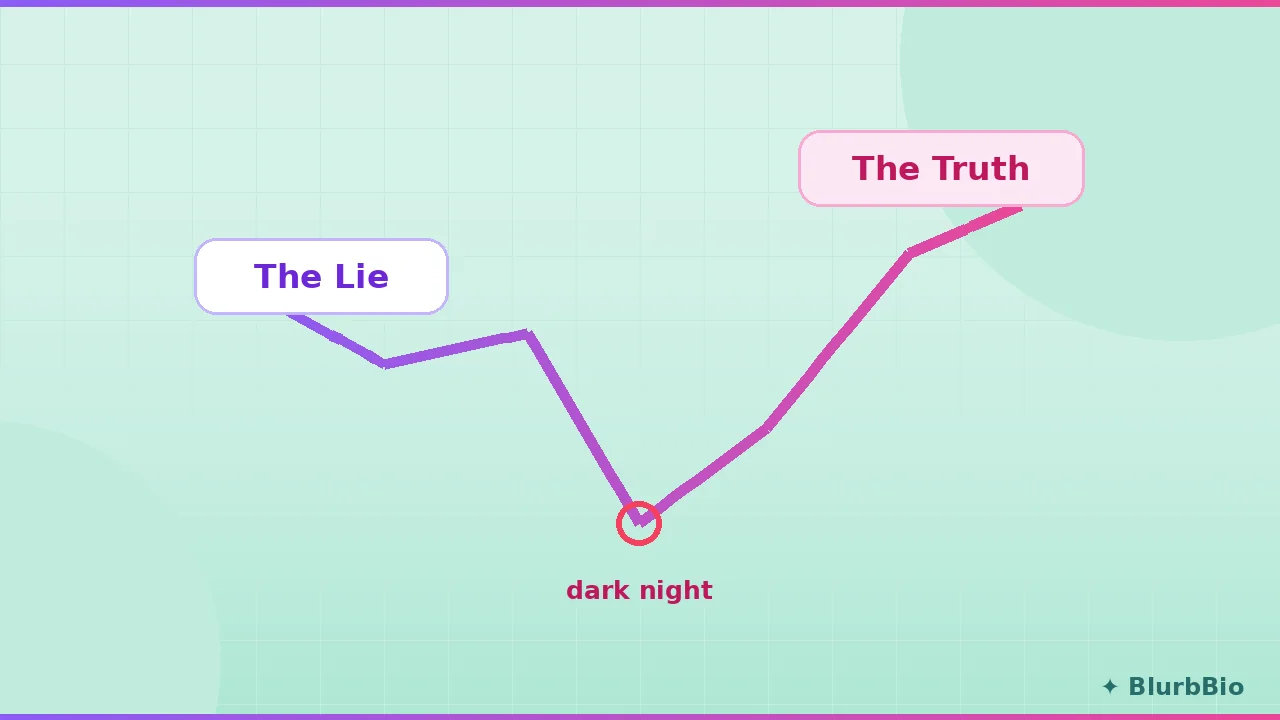
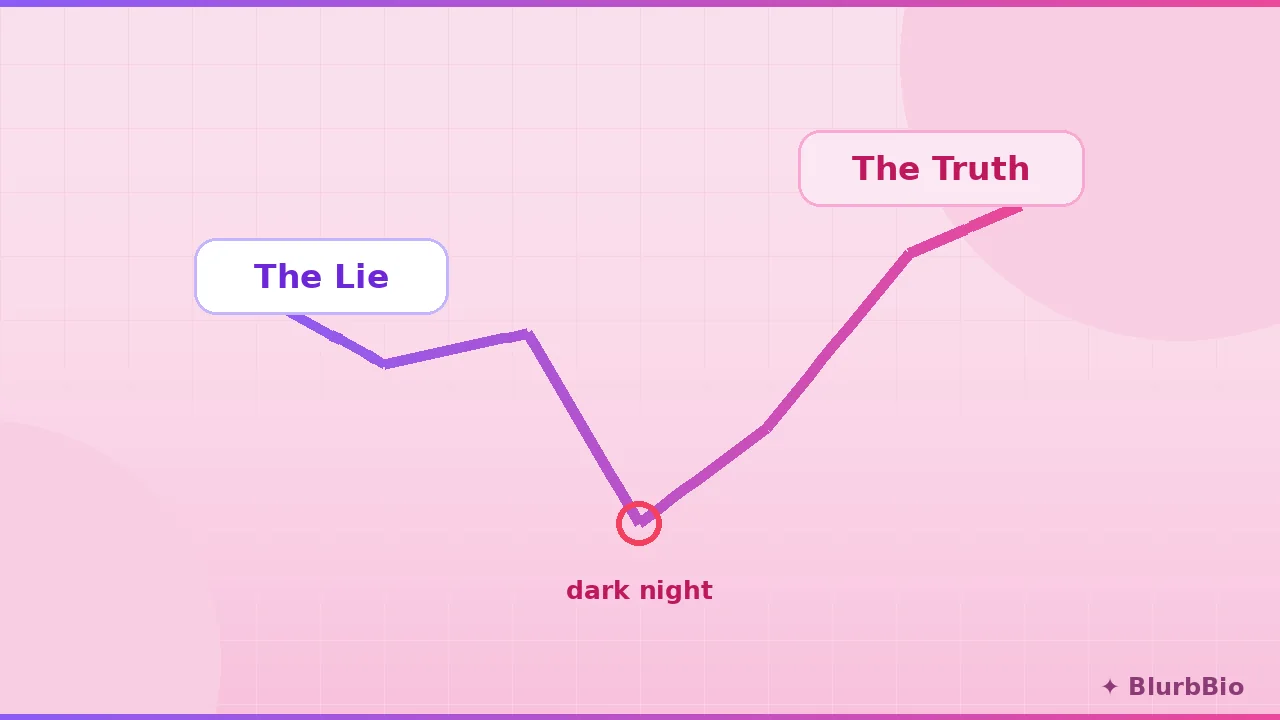
The wound creates the misbelief. The misbelief drives the want. The want conflicts with the need. The ghost reminds them of the cost of staying the same. The arc is the story of what happens when those forces collide with the world.
All other characterisation, dialogue, physical description, relationships, habits, tics, flows from this foundation and feels authentic precisely because of it. The foundation isn't visible to readers. The authenticity it produces is.
BlurbBio's Auto Story Bible tracks every character's established details as you write, physical descriptions, relationship states, psychological notes, chapter-by-chapter arc progression. When a new scene contradicts a character's established behaviour or physical description, BlurbBio flags it before it reaches a reader. This is what separates an automatic story bible from a manual one; the story bible software guide walks through the difference.
See also: Show Don't Tell: The Complete Guide · How to Build a Story Bible · How to Write a Novel: The Complete Guide