Readers do not fall in love with what characters do. They fall in love with why, and the deepest why in fiction is almost always a wrongness: something the character is certain is true about the world that the reader can see is not. The certainty is the story. Watching events pry it loose, or fail to, is why anyone turns three hundred pages.
Craft traditions name this differently: the misbelief, the lie the character believes, the fatal premise. The label matters less than the discipline of building it properly, because a vague misbelief produces a vague book, and a sharp one quietly organizes every scene you will ever write for this character.
The specificity test
Start with the drafts most writers produce first: she believes she is unlovable, he believes he must be strong, she believes she cannot trust anyone. These are not misbeliefs yet. They are categories of misbelief, and the test that exposes them is behavioral: can you predict, from the sentence alone, what this character does in a crisis?
"She believes she is unlovable" predicts nothing. "She believes love is a payment for usefulness, so the moment she cannot be useful she leaves before she can be left" predicts everything: the overfunctioning at work, the flight response in the third act, the exact shape of the ending she needs. The sharpening questions that get you there: learned from whom, about what kind of love, producing which behavior, protecting against which specific fear?
One more property separates working misbeliefs from decoration: a real one was once true, or close enough. It protected the character in the situation that taught it. That is why they defend it, why it feels like wisdom to them rather than damage, and why dismantling it will cost the story's full length. A belief that never paid off is just a flaw wearing a trench coat.
Write the origin, or the middle will tell on you
You cannot fake knowing where the misbelief came from. Books that skip this step reveal themselves in a specific way: the protagonist's resistance in the middle chapters becomes arbitrary, escalating and softening as the plot requires rather than as the person would. The fix is unglamorous and completely reliable: write the origin scene, privately.
Not a note that says "bullied in school." A scene. The character walks in believing something healthy. They have a goal and an expectation. Reality splits from the expectation at one precise moment, and they walk out having concluded the wrong lesson, the one that will run their life until your novel ends. This scene never enters the manuscript, and it changes every page of it, because from now on you are not inventing your character's reactions; you are remembering them.
Between that origin and page one, sketch the turning points: a few moments where life confirmed the lesson, each at higher stakes. Choosing the misbelief should cost or win them something real each time. If the three moments feel interchangeable, they are not escalating, and the misbelief will arrive at page one insufficiently fortified for the siege your plot is about to lay.
Escalation is the plot's job
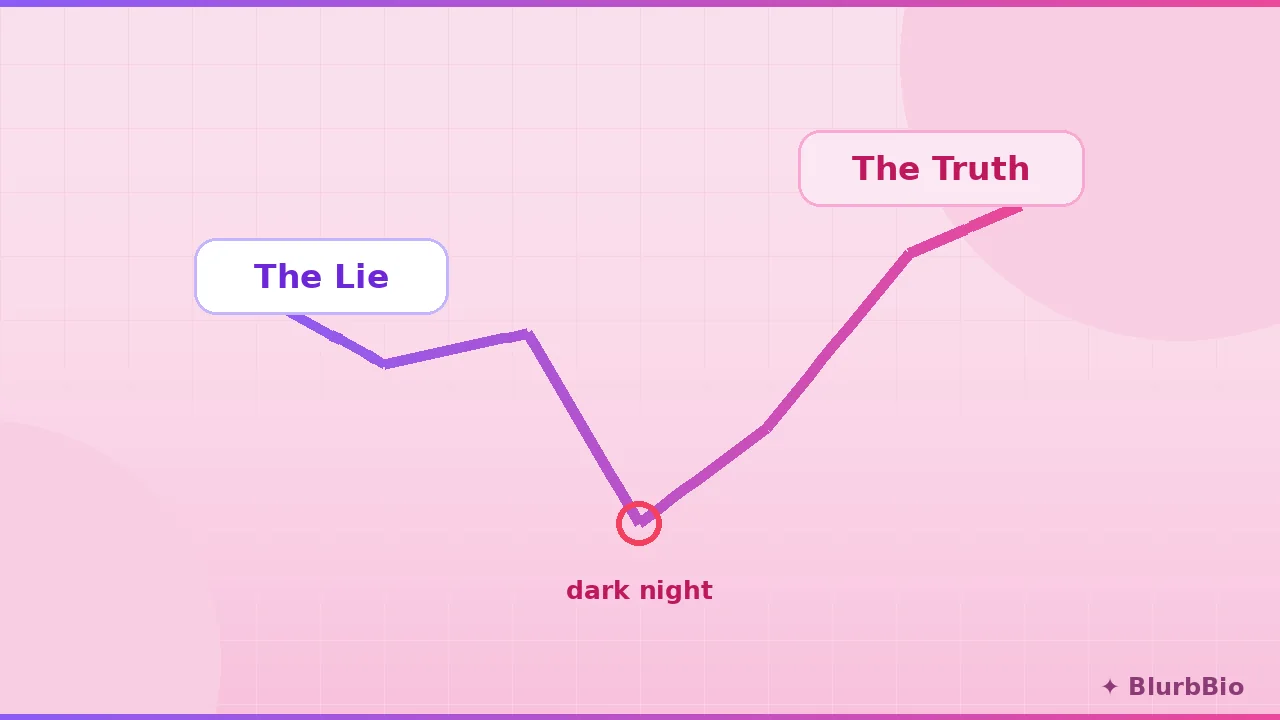
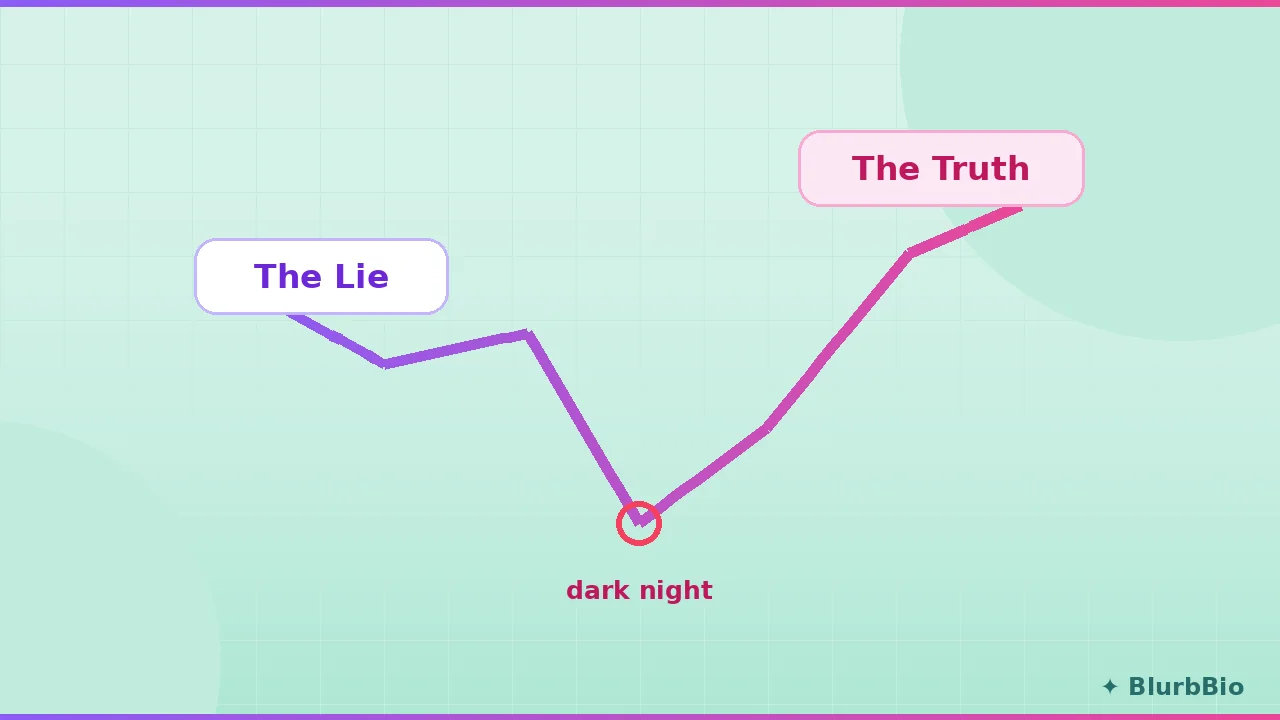
Once the misbelief exists, plot has a definition: the sequence of external events that makes continuing to believe it progressively more expensive. Early scenes can brush it. Midpoint events should force the character to defend it out loud. By the crisis, holding the misbelief and getting what they want must be visibly incompatible, and the character has to choose.
A practical way to keep this honest is to rate the internal stakes of every planned scene from one to five and look at the line. It should climb unevenly, with recoveries, toward a peak near the end. Long flat stretches, three or more scenes at the same internal intensity, are the sag readers feel in the middle of books whose external plots are working fine. The events kept happening; the cost stopped rising.
Decide the ending on purpose
The misbelief's fate is the book's meaning, so choose it deliberately rather than defaulting. Four options cover nearly everything. The positive change arc breaks the misbelief; the character earns the hard truth and it costs them, which is what makes it feel earned. The tragic arc lets the misbelief win; the character refuses the truth when it is offered and pays. The static arc inverts the machinery: the character holds a truth under pressure while the world around them is forced to change. The failed change arc is the most quietly devastating: the character sees the truth, reaches for it, and falls short.
Whichever you choose, the ending is only as powerful as the wrongness was believable. Which returns everything to the first move: one sentence, specific enough to predict a life, wrong enough to fill a book.